4 mistakes to avoid when traveling by train

4 mistakes to avoid when traveling by train

Traveling by train is a privilege not everyone can have on a daily basis. Moreover, traversing long distances by train can be exciting and challenging. Despite its seemingly straightforward nature, people make some mistakes when traveling by train. First-time or infrequent travelers generally make these mistakes, which can reduce the overall experience of long-distance train journeys. Here are four common mistakes to avoid when traveling by train. Relying solely on train food A common mistake people tend to make in the pre-booking phase is assuming that food will be served onboard the train. That detail is usually specified in the itinerary and can be seen when one books a ticket online or offline. One should certainly know whether the train they are boarding for a long journey has food served onboard or not. Once in, another common mistake people make is relying solely on train food. Now, eating train food is convenient; however, it is still processed food to a certain degree, and its health-related credibility can be slightly questionable. Ideally, one should get food from home when on a train journey. Not reading the itinerary carefully The itinerary contains all the details of a given journey, such as the stations at which the train will stop, the ETA at the destination, and the seat information. Not reading all these details carefully and then not making necessary changes can be significant mistakes, especially if they come in as shocks during the journey itself. That can be corrected by avoiding the next mistake on the list. Not booking tickets in advance People often miss reading the tickets or itinerary carefully when in a hurry. That happens when travelers book their tickets and the holiday schedule at the last minute. When one books at such a late stage, the ticket prices are at their highest, the best seats are often taken, and travelers have little choice in anything they wish to include in their reservation.

GERD and its critical aspects

GERD and its critical aspects

GERD stands for gastroesophageal reflux disease and is a condition in which the stomach acid rises back into the food pipe and causes a sense of discomfort. Over time, this continuous backwash impacts the esophagus lining and causes heartburn. A lot of people occasionally experience acid reflux and heartburn, but GERD occurs when this problem becomes a lot more frequent. In this article, we will look at the various aspects that need to be considered when it comes to GERD. Signs of GERD There are plenty of signs and symptoms of GERD, and heartburn is the biggest one. Other major symptoms of GERD include Chest pain Difficulty when it comes to swallowing A continual regurgitation of both food and sour stomach liquids A sensation or a lump inside the throat For people who have night-time acid reflux, the common symptoms include laryngitis, chronic cough, or asthma as time progresses. They may also suffer from disrupted sleep. For such instances of GERD and heartburn, we recommend consulting an expert as soon as these symptoms become frequent. Causes of GERD GERD is the consequence of acid reflux and heartburn occurring frequently in the body. When we swallow our food, the circular band of muscles around the esophagus relaxes to ensure that the entire ingestion process happens smoothly. This also allows the liquids and the foods to flow inside the stomach without hassle. Once this process is complete, the sphincter muscle closes up again. The main reason for GERD to occur is when there is a hindrance in this process. In case the sphincter weakens, the acid can easily flow back into the food pipe. If this process keeps occurring continuously, then it can end up eroding the esophagus lining, resulting in inflammation. So, this entire process is the main reason for GERD to occur.
Lung cancer – Types, symptoms, and causes

Lung cancer – Types, symptoms, and causes

When the cells in the lungs begin to abnormally multiply and grow, it results in cancer. Lung cancer is one of the leading causes of death in the world. And the risk of suffering from this life-threatening disease is even higher when one is a smoker. Herein, we discuss the various factors that come into play when it comes to lung cancer. Symptoms of lung cancer Usually, lung cancer does not present any symptoms or signs in the early stages. However, as the disease progresses, one may notice Headache Bone pain Loss in weight Hoarse voice Chest pain Shortness of breath Coughing of blood A new cough that persists One should consult a doctor if they notice these signs. If someone is unable to quit smoking, they should visit a medical practitioner for quitting techniques to help avoid this disease. Types of lung cancer There are two kinds of lung cancer: Non-small cell lung cancer This is a catchall term that includes many varieties of this disease, like large cell carcinoma, squamous cell carcinoma, and adenocarcinoma. Small cell lung cancer This happens mainly to people who are heavy smokers, and it’s rarer than non-small cell lung cancer. Risk factors of lung cancer Various factors put you at risk of getting this disease. While some of them can be controlled, others cannot. One should watch out for these top factors in their day-to-day life and environment: Family history If one’s family has a history of this disease, perhaps in a parent, child, or sibling, then they may get it as well. Exposure to radon gas It could be a part of the air or the risk could be in the natural breakdown of uranium in the water, rock, or soil. These can be found in any building or home. Exposure to carcinogens or asbestos Workplaces that are exposed to these substances are quite harmful.
Popular software for building a strong resume

Popular software for building a strong resume

A professionally crafted resume that is to the point, has the necessary specifics, and highlights your skills increases your chances of getting a good job. The document details and addresses what is important, right from their personal/professional preferences to career and growth expectations. Today, you can use a resume builder software to simply this task. Here are the top free and paid options you must check out! Resume Genius If you want to create a truly professional resume and are okay with paying for it, Resume Genius is a software that can deliver in less than 10 minutes. You can select from myriad template styles and answer a detailed questionnaire for the software to compile all the information. You can also add more details relevant to the template to make the resume more comprehensive. The option of switching templates after you have selected one in the beginning allows for added flexibility in terms of design and content viewing. Once you are satisfied with the results, simply download the resume for a nominal fee of $2 during the trial period. Note that the monthly subscription and download rates will vary on the basis of the plan you pick. Resume.com Looking for free templates and designs? Download a copy free of charge in minutes with Resume.com’s comprehensive software tool. Simply follow the step-by-step process to add information, refer to expert tips curated by industry experts, and download a well-crafted professional resume today. There are multiple columns and subheadings to fill out details about education, professional skills, work experience, as well as your personality traits or preferences. You can also refer to sample resumes from the website’s exclusive database and create one based on any of the available templates. Resume Builder/Resume Maker 2021 Some people may find it difficult to use comprehensive software tools and need a simpler solution to create a detailed looking resume.
Best Molekule air purifiers of 2021

Best Molekule air purifiers of 2021

Molekule air purifiers are somewhat of a rage in the market currently. The brand has done a superb job of communicating its state-of-the-art technology that gives other air purifiers a run for their money. Most purifiers use what is called the HEPA technology to keep the environment dust-free, but Molekule uses something more special–the PECO technology. Molekule technology The brand has been marketing its products for its unique PECO technology, different from most other air purifiers. Photo Electrochemical Oxidation (PECO) is a technology that traps harmful dust particles and destroys them completely, making the air pure. Molekule has a regular motor and a pre-filter that traps dust particles, pet hair, and other pollutants. Still, their special PECO technology breaks down these harmful particulates into basic molecular components that are safe to be in the environment. After a few test runs, it was observed that it could destroy mold spores and allergens like pollen as well. Products to choose from Let’s find out the best Molekule Air Purifiers of 2021: Air Mini The Air Mini is ideal for a room size of up to 250 square feet and can be purchased at the price of around $399 from Molekule’s official website. Air Mini Plus There’s no particular difference between the Air Mini and the Plus models, except for some add-on features present in the latter, such as the matter sensor, particle level indicator, and auto-protect. These additional features bring the price of Air Mini Plus to approximately $500. Air This model is suitable for rooms as big as 600 square feet. The design is minimalistic, and the product comes with a leather strap, which is also found in other Molekule models, for easy portability. It is priced at approximately $800 on the website. Air Pro The Pro model is ideal for rooms that are up to 1000 square feet big.
Notable features of the 2021 Subaru Ascent

Notable features of the 2021 Subaru Ascent

If you’re in the market for a new car, you know it’s important to not ignore Subaru’s biggest vehicle, the Ascent. It’s a three-row SUV designed essentially for families. The Japanese automaker first launched the Ascent in 2019 and has since upgraded it to compete against the latest SUVs from top car manufacturers. In addition to the basic model, the brand-new Ascent comes in three trim variants: Premium, Limited, and Touring. Herein, let’s look at key features of the 2021 Subaru Ascent. Interior room and cargo space The spacious interior of the 2021 Subaru Ascent is one of its highlights. Its three rows of flexible seating offers can comfortably accommodate seven or eight passengers. The second-row captain’s chairs are available on Premium, Limited, and Touring models. With all second and third-row seats down, cargo space in the Ascent increases to a maximum of 86.5 cubic feet. That means there’s ample space for every passenger and their gear. Safety and driver-assistance The Insurance Institute for Highway Safety (IIHS) gave the 2021 Subaru Ascent the highest possible rating, making it one of the safest vehicles out there. The EyeSight® Driver Assist Technology is standard across all Ascent models and is as good as having extra sets of eyes on the road that can do everything from monitoring traffic movement to preventing you from going outside your lane. Other important safety and driver-assistance features include forward-collision warning, automated emergency braking, and adaptive cruise control, among many others. Performance, towing capacity, and fuel economy The 2021 Subaru Ascent is packed with a 2.5-liter, four-cylinder engine that outputs 260 horsepower. The engine is coupled with a continuously variable transmission (CVT) automatic and standard all-wheel drive for seamless gear changing and excellent off-roading experiences. The powerful engine has an impressive towing capacity of up to 5,000 pounds.
10 must-have items for a complete wardrobe

10 must-have items for a complete wardrobe

Fashion enthusiasts or not, most people try to look classy, stylish, and appropriate for every occasion and experiment with styling options for different events. With new drops every few months, you get access to a wide array of clothes and accessories, making it tougher to decide things to buy and things to skip. To make the decision easier for you, here are 10 basic items that every closet should have: All-purpose knitwear Whether you prefer a fancy cashmere sweater, or something light and breathable, knitwear is a must-have. To dress it up, pop a knitted cardigan or coverup over your shoulders in the spring. Denim No wardrobe is complete without a pair of denim jeans. Whether high-waisted or low-waisted, skinny or flared, there is something for everyone. White shirt A white button-up shirt is a versatile must-have. Wear it with a blazer for a formal look, or pair it with a knitted skirt for effortless evening wear. Tailored trousers A relaxed but tailored pair of trousers can elevate any basic look. Trousers in neutral shades like camel or beige are a great choice to match with absolutely everything. Sneakers A great pair of sneakers are a staple for your closet. The perfect choice to run errands in, sneakers are practical and comfortable accessories. Striped T-shirt The striped tee (or marinière) has been a symbol of timeless French fashion since the 1850s and can be easily dressed up or down depending on the occasion. Leather jacket Leather jackets (or faux leather jackets) are a great investment as they can make any outfit look effortlessly cool. Classic coat A longline, tailored coat is a chic addition to basic outfits. Get them in an oversized fit to layer over any knits to wear them all year round. Basic T-shirt Basic tees are a no-brainer.
6 factors to consider when buying an SUV

6 factors to consider when buying an SUV

SUVs, also known as sports utility vehicles, are large, family-sized vehicles frequently seen on the road. They are among the safest and most spacious cars on the market, and because of their excellent fuel economy, they are also suitable for daily use. There are too many factors to consider when selecting the right type of car, which can make the process tedious. Here are the top features to look for when purchasing an SUV. Size requirement The majority of SUVs can seat at least five people. Many mid-sized and full-sized models come with a third-row seat option, bringing the total number of seats up to six or eight. However, cargo space in three-row SUVs is limited when the third-row seats are upright. Knowing what size you need before going to the dealer will make the process much easier. Type of SUV There are two types of SUVs: crossovers and conventional. Crossovers are often smaller and have better handling like a car, whereas conventional vehicles drive more like trucks and frequently have more power or towing capacity. Consider either, depending on your driving style and whether your new vehicle will be hauling trailers or heavy loads. Safety options Another important factor to consider when buying an SUV is its overall safety. SUVs have been known to roll over occasionally. Newer SUV models are designed to be safe and meet stringent standards. Most SUVs have airbags and antilock brakes, and many have additional safety features such as rearview cameras, lane departure warning systems, and blind spot warning systems. Two-wheel or four-wheel drive These vehicles are available in two-wheel or four-wheel drive configurations. A two-wheel drive vehicle will be useful if you live in a city. It is also easy to maintain and saves fuel. A four-wheel-drive car, however, may be a better choice if you are navigating lousy weather or difficult terrain.
Nutrient dense foods to eat for menopause

Nutrient dense foods to eat for menopause

Menopause marks the end of the regular menstrual cycle. If a woman doesn’t get her period for over 12 months, her body will undergo a series of metabolic changes. Menopause can trigger several discomforts ranging from physical symptoms like hot flashes and night sweats to emotional disturbances like mood swings and personality changes. However, it is possible to manage menopause with simple changes in daily nutrition and lifestyle to improve the outlook in the long run. Cruciferous vegetables, leafy greens, and berries Several research studies explain why including more green vegetables and berries helped women experience fewer hot flashes associated with menopause over time. Top picks include broccoli, cauliflower, and dark berries, which help increase estrogen levels and further lower the risk of breast cancer complications. Dark greens and leafy vegetables like spinach, chard, leaf lettuce, and beet are also rich sources of calcium, fiber, potassium, magnesium, and B vitamins. These nutrients are essential for regulating mood and energy to lower the impact of menopausal hormone changes that affect one’s personality. Healthy omega-3 fatty foods Omega 3 fatty acid is one of the crucial anti-inflammatory compounds to include in daily nutrition to help manage hot flashes and lower the severity of night sweats experienced during menopause. Fatty fish like salmon, tuna, mackerel, herring, and sardines are loaded with omega-3s. Chia seeds, hemp seeds, and other assorted nuts are also good sources of healthy fats. Foods rich in calcium and vitamin D Low levels of estrogen triggered due to hormonal changes affect calcium levels in the body. This, in turn, increases the risk of osteoporosis, among other bone and joint problems. Including more calcium-rich foods and beverages are essential for maintaining healthy bones. Fortified milk, yogurt, and cheese are healthy sources of calcium, vitamin D, and vitamin K nutrients that help strengthen the bones preventing flare-ups and complications.
6 mistakes to evade while buying an e-bike

6 mistakes to evade while buying an e-bike

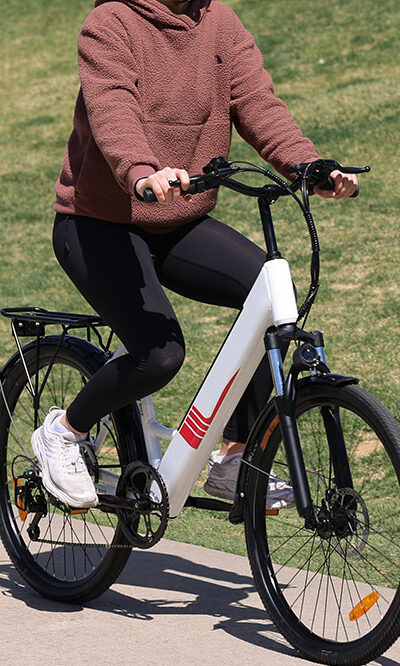
Bicycles have become increasingly popular in the last few years. While people looked for ways to stay fit outside the gym and alternatives for public transportation, the sale of e-bikes rose by leaps and bounds. Rising gas prices further fueled the e-bike trend. With price tags ranging between $1,000 to $10,000, an e-bike is a serious investment. Here are six mistakes to avoid when looking for the right electric bike model for yourself: Buying the least expensive bike Quality is worth paying for when purchasing an e-bike. Cheap parts can wear out within the first 500 miles, and replacement parts may be difficult to source. So instead of buying the cheapest option, look for one that offers great quality and an attractive warranty. Not comparing batteries E-bike batteries differ in output based on their brand and manufacturer. So before making a purchase, check the peak voltage and amp hours to find the best fit for your biking needs. Not understanding drive system differences E-bikes generally offer two different drive systems – mid-drive and hub motors. Mid-drive systems are typically lighter, more efficient, and a natural extension of your efforts. They are easy to drive on flat grounds. On the other hand, hub motors are typically heavier but more powerful for hill climbing. Consider these requirements and lifestyle preferences before purchasing an e-bike. Not getting a warranty Batteries for e-bikes are the most expensive components. Although battery technology has advanced rapidly in the last few years, these parts are not faultless. Most manufacturers issue a warranty with their e-bikes or engines during a sale. An e-bike sold without a warranty is a testament to its poor engine quality, so be careful when making a purchase. Buying the wrong size Unfortunately, e-bikes aren’t one-size-fits-all. So when buying an e-bike, look for a comfortable driving fit to avoid future pain, which means buying one at a comfortable height, that offers comfortable and optimal leg extension and encourages your natural posture without hurting your back or neck.
5 smoothies to help curb arthritis and joint pain

5 smoothies to help curb arthritis and joint pain

The pain caused by arthritis is often agonizing. It is a broader term for joint pain or joint diseases, and its effects can be disabling and prevent one from indulging in regular activities. Eating certain foods may also help one tackle the symptoms of arthritis. However, constantly having limited meals can be tiresome. Therefore, here are six healthy and delicious smoothie ideas to help one manage arthritis and joint pain. Pineapple anti-inflammatory smoothie Pineapple juice is rich in enzymes like bromelain that can reduce pain caused by arthritis. You can make a delicious smoothie by mixing other ingredients with anti-inflammatory properties, like romaine lettuce, cilantro, and ginger, to create a healthy smoothie. Add water occasionally until the blend reaches a consistency of your liking. Blueberry kale smoothie Berries like blueberries are known for their rich antioxidant and anti-inflammatory properties. Blend three-quarters of the food with a cup of kale, bananas, two pitted dates, and half a tablespoon of almond butter, and top it with low-fat milk. This combination may help fight the effects of arthritis pains. One can also try making a smoothie with other berries, including blackberries, raspberries, and strawberries, as they have similar properties that may help curb arthritis inflammation. Vanilla matcha protein smoothie Matcha is a powdered green tea leaf rich in antioxidants known to reduce inflammation and curb cartilage breakdown. To make the smoothie, you will need a scoop of vanilla powder, half a teaspoon of honey, fresh vanilla bean, two teaspoons of matcha green tea powder, and a cup of low-fat milk or almond milk. Combine these properties in a blender, and you’ve got yourself a healthy smoothie for joint pain. Broccoli smoothie Eating vegetables like broccoli could introduce multiple antioxidants and anti-inflammatory properties essential to tackle arthritis. It is also easy to make as you only need a handful of broccoli, kale, half a cucumber, and a thumb-sized piece of ginger.
4 breathing errors to avoid for healthy lungs

4 breathing errors to avoid for healthy lungs

Respiration is a vital function for survival, but certain breathing habits can significantly affect lung health. The body has a natural defense system to prevent dirt, germs, and bacteria from entering the lungs, and the right practices can help you maintain optimal function. Further, you can take a few important steps to lower the risk of respiratory issues. So, here are common breathing mistakes to avoid for maintaining lung health: Shallow breathing Shallow breathing, or chest breathing, is a common error that involves taking quick, short breaths that only fill the top portion of the lungs. As a result, the lungs do not get enough oxygen, which can cause fatigue, dizziness, and even anxiety. To avoid shallow breathing, practice diaphragmatic breathing, i.e., taking deep breaths that fill your belly with air. First, inhale slowly through the nose, with one hand on the belly and the other on your chest, and feel your belly rise with each breath. Then, exhale slowly through the mouth and repeat for several minutes. Holding your breath Another common mistake you can make, especially when exercising, is holding your breath. This can lead to a lack of oxygen in the lungs, increasing the risk of fatigue, dizziness, and even fainting. So, you should exhale slowly during the most difficult part of the exercise or physical activity. This will help you maintain a steady oxygen flow to your lungs and muscles, allowing you to work out better and avoid injury. Mouth breathing When you breathe through the mouth, you inhale dry, unfiltered, and unmoisturized air. This can irritate the throat, cause dry mouth, and even increase the risk of respiratory infections. So, you should try to breathe through your nose as much as possible. The nose filters and warms the air, lowering the risk of respiratory infections and protecting your lungs.